The Gray Hair Program
Gray Blending in Carmel Mountain Ranch: Coverage Without the Every-Three-Week Ordeal
There’s a moment most women hit somewhere in their fifties, usually around week three after a color appointment, staring at the line of silver along the part and doing the math on how soon they can get back in the chair. The roots. The expense. The Sunday spent hiding it under a part switch. Covering gray every few weeks stops feeling like grooming and starts feeling like a second job.
Gray blending is the way off that treadmill. Instead of painting over every strand of silver on a tight schedule, blending weaves highlights and lowlights through your hair so the gray reads as dimension instead of regrowth. The result grows out soft, which is what buys you eight to sixteen weeks between visits instead of three or four.
Gray blending is the way off that treadmill. Instead of painting over every strand of silver on a tight schedule, blending weaves highlights and lowlights through your hair so the gray reads as dimension instead of regrowth. The result grows out soft, which is what buys you eight to sixteen weeks between visits instead of three or four.
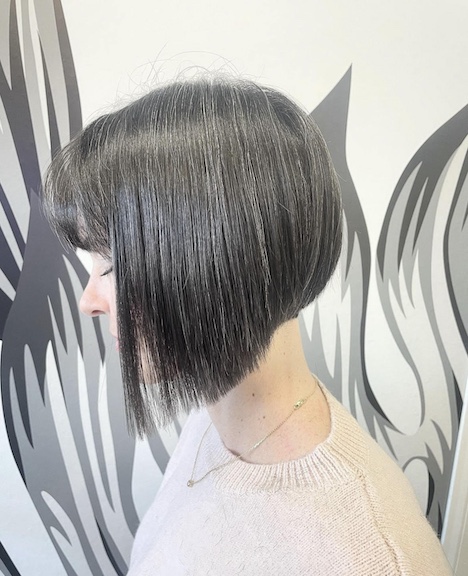
What Gray Blending Actually Is
Think of it as a picket fence, not a brick wall. Full coverage is the brick wall: an opaque, uniform layer of color over everything, which looks polished on day one and then shows a sharp line the moment your roots grow. Blending is the picket fence. Enough color to break up the gray and read as intentional, with enough transparency to let your natural silver show through and blur the regrowth.
Because there’s no single wall of color meeting a wall of silver, there’s no demarcation line to panic about. The grow-out is gradual and forgiving. That’s the whole point, and it’s why blending has become the go-to for women who are tired of covering but not ready to go fully silver.
Because there’s no single wall of color meeting a wall of silver, there’s no demarcation line to panic about. The grow-out is gradual and forgiving. That’s the whole point, and it’s why blending has become the go-to for women who are tired of covering but not ready to go fully silver.
Who Gray Blending Is For
Blending is the middle path, and most women who choose it are somewhere between “I still want my color” and “I’m exhausted by maintaining it.” A few signs it’s your lane:
- You're roughly 30 to 70 percent gray and covering it on a schedule you resent.
- You want to look current and like yourself, not younger, and definitely not "age-appropriate" in the way that word usually gets used.
- You'd take fewer, calmer salon visits over a flawless finish that lasts nineteen days.
- You're gray-curious but not ready to commit to a full transition, and you want a bridge that keeps its options open.
If you’re not sure which side of the line you’re on, that’s what the consultation is for. Kasey maps coverage, blending, and full transition honestly and has no stake in steering you toward silver.
How It Works
Your blend depends on your base color, how much gray you have, and where it sits, but most sessions at the studio pull from the same toolkit.
Highlights & Lowlights
They do the structural work. Fine, silver-toned highlights woven near the part and hairline trick the eye into reading your regrowth as dimension. Lowlights add depth so the whole thing looks rich instead of washed out. Together they blur the exact spot where your gray meets your color.
Gloss & Toner
A gloss or toner ties it together and keeps it from going brassy. Growing-in silver reads cool and bright while older dye fades warm, and a gloss bridges the two so your hair looks like one deliberate color rather than a project in progress. A purple shampoo at home stretches that brightness between appointments.
A Shaping Cut
A shaping cut finishes it. Removing weight in the right places lets the blend move and lets your natural texture show, which matters more as gray hair comes in coarser than what you’re used to.
Gray Blending for Dark Hair
Dark hair is where blending earns its keep, because that’s where the contrast is harshest. Silver roots against dark brown or black is the most obvious regrowth there is, and it’s exactly the situation full coverage handles worst: one missed week and the line is impossible to hide.
Blending dark hair takes more skill and usually more patience. The highlights have to be lifted carefully so they land as soft silver-and-ash dimension rather than stripes, and if there’s years of box dye built up, we may need a session of color correction first to get an even canvas. Done right, the payoff is bigger than on lighter hair: the same silver that used to shout “roots” becomes the thing that makes the whole color look expensive. If your hair is dark, bring photos to the consultation and expect the blending phase to matter more, in a good way.
Blending dark hair takes more skill and usually more patience. The highlights have to be lifted carefully so they land as soft silver-and-ash dimension rather than stripes, and if there’s years of box dye built up, we may need a session of color correction first to get an even canvas. Done right, the payoff is bigger than on lighter hair: the same silver that used to shout “roots” becomes the thing that makes the whole color look expensive. If your hair is dark, bring photos to the consultation and expect the blending phase to matter more, in a good way.
What It Costs
Blending is priced by what your hair needs that day, not a flat package. Blending sessions start at $170, a toner and blow-dry runs $85, and a shaping cut is $100. Most clients land between $170 and $285 per visit while the blend is being built, then taper to occasional toning and trims as their silver takes over.
Here’s the part that surprises people: because blending stretches your visits to every eight to sixteen weeks instead of every three to four, it usually costs less per year than the coverage you’re doing now, even though each visit is a bit more. Your consultation includes an estimate so you can compare it against what you’re actually spending.
Here’s the part that surprises people: because blending stretches your visits to every eight to sixteen weeks instead of every three to four, it usually costs less per year than the coverage you’re doing now, even though each visit is a bit more. Your consultation includes an estimate so you can compare it against what you’re actually spending.
The Maintenance, Honestly
Lower maintenance is not no maintenance. The tradeoff for stretching your appointments is that you take on a little home care: a purple or blue shampoo to keep the silver from going yellow, and a moisture treatment now and then, because gray hair tends to run drier. That’s genuinely it. Compared to a standing root appointment every three weeks, most women find it a relief. And the before-and-after gallery is worth a look before you book, so you can see real blends on real clients rather than filtered inspiration photos.
Gray Blending FAQ
Coverage paints over the gray with a solid, uniform color and shows a hard line as it grows out, so it needs a touch-up every three to four weeks. Blending weaves highlights and lowlights through the gray so it reads as dimension and grows out soft, which stretches your visits to eight to sixteen weeks. Coverage looks flawless and high-maintenance. Blending looks lived-in and low-maintenance.
Yes, and dark-haired women often benefit most, because the silver-to-dark contrast is the harshest to manage with coverage. The blending phase takes more skill, and if there’s box-dye buildup you may need a color correction first, but the payoff is a color that hides regrowth instead of announcing it.
Most blending clients come every 8 to 16 weeks, versus every 3 to 4 for full coverage. Your exact interval depends on how fast your hair grows and how much contrast you want to keep.
Per visit, blending usually costs a bit more. Per year, it usually costs less, because you’re coming in far less often. Your consultation includes an estimate so you can see the real comparison for your hair.
Anytime. Blended hair converts back to coverage in a single appointment, which is one of its quiet advantages: you’re never stranded or locked in.
Ready when you are
Start with a consultation: an honest look at your gray, your options, and what each path really costs. No pressure, no pushing.

Hair by Kasey Erokhin. A private one-chair studio for color, cuts, and gray done your way.
Serving
Rancho Bernardo · Poway
4S Ranch · Sabre Springs
Visit
Sola Salon Studios, Suite 15
12004 Carmel Mountain Road
San Diego, CA 92128
(917) 374-4878
Free parking
12004 Carmel Mountain Road
San Diego, CA 92128
(917) 374-4878
Free parking
© 2026 The Salon 619 · Instagram