Balayage in Carmel Mountain Ranch: Color That Grows Out Like It Was Never a Problem
The dead giveaway of most salon color isn’t day one. It’s week six, when a stripe of regrowth announces exactly when your last appointment was. Balayage is the technique built to erase that tell. Instead of saturating every strand from the root in foil, the color is hand-painted onto the surface of the hair, heavier at the ends, feathering out as it moves up. Because it never forms a hard wall of color at the scalp, there’s no hard line to grow out. Your color just softens, the way hair does after a summer outside.
At this studio it’s been on the menu for years under the name “New Age Blonde,” and it’s the same service: hand-painted, dimensional, built to be lived in rather than maintained.
What Balayage Actually Is (and What "Lived-In Color" Means)
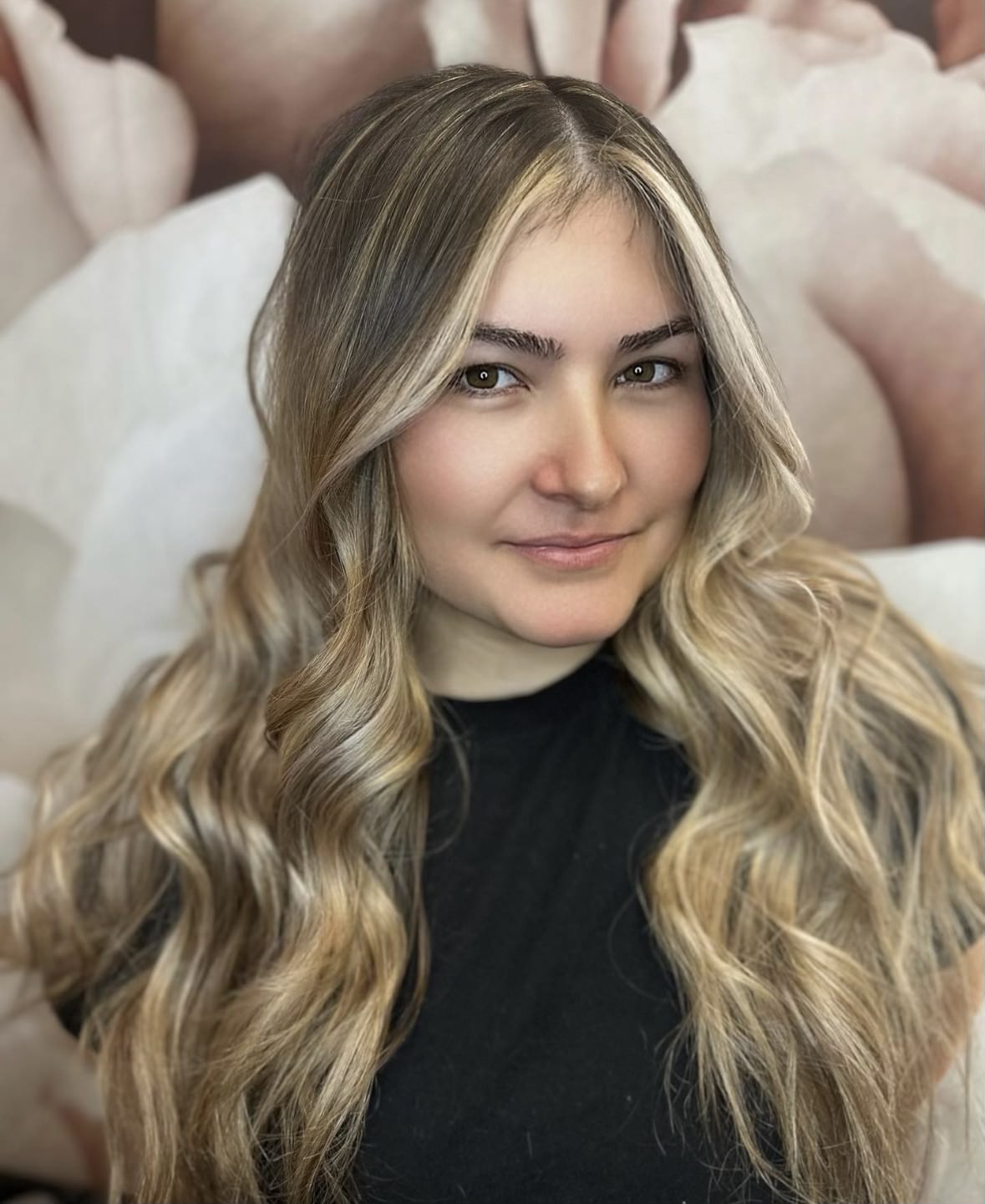
Balayage is a French word for sweeping, and that’s literally the application: lightener swept onto sections of hair freehand, placed where the light would naturally hit, without foils sealing color up to the root or uniform rows. The colorist’s judgment does the work a pattern would normally do, which is why the result looks like something that happened to your hair over time rather than something that happened to it on a Tuesday.
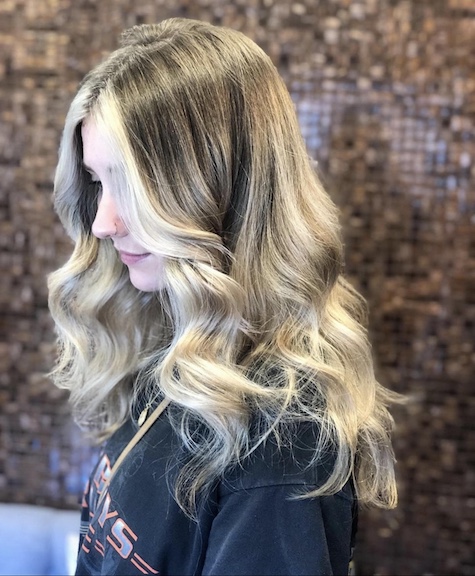
“Lived-in color” is the look this technique produces: a little deeper at the root, brighter through the mid-lengths and ends, blended so softly you can’t point to where one becomes the other. It’s worth being precise here because the terms get used interchangeably online. Balayage is the technique. Lived-in is the result. You come in asking for either and you’re asking for the same appointment.
Who Balayage Is For
- You want to be blonder, warmer, or brighter without signing up for a standing every-five-weeks appointment.
- You'd rather your color look expensive and unbothered than freshly done: sun-kissed rather than striped.
- Your calendar is full and "low-maintenance color" sounds less like a compromise and more like the entire point.
- You've grown out foil highlights before, hated the line, and swore off color entirely. Balayage is usually the way back in.
One honest caveat: balayage is soft by design. If what you want is bright, uniform, root-to-tip blonde, traditional highlights will get you there more directly, and there’s no shame in that. The consultation sorts out which one your inspiration photos are actually showing.
How It Works
Every balayage here starts with a conversation about where you want the brightness and how much upkeep you’ll genuinely tolerate, because those two answers drive everything.
The painting itself is the craft. Sections are chosen and swept by hand, placed around your face, your part, and the way your hair falls, so the brightness lands where it flatters you specifically. This is where a Vidal Sassoon-trained eye earns its money: bad balayage reads as random streaks, good balayage reads as genetics.
A toner finishes it. Freshly lifted hair almost always needs its tone adjusted, warmer or cooler, so the result looks intentional rather than raw. This is also your insurance against brass down the road.
A partial balayage concentrates the work through your part, face-frame, and top layers, and is plenty for most first-timers. A full balayage works through the whole head for a bigger transformation or for hair that’s worn up a lot, where the underneath shows.
What It Costs
Partial balayage is $170 and full balayage runs $200 and up depending on length and density. A toner refresh with blow-dry between appointments is $85. Full pricing is on the pricing page, and your consultation includes an estimate before anything is mixed.
Because the grow-out is soft, most balayage clients book every 10 to 16 weeks rather than every 4 to 6. Do that math across a year and balayage is often the cheaper way to be blonde, even though each visit costs more than a basic touch-up.
The Maintenance, Honestly
Low-maintenance is the honest description, and it still involves a little upkeep. Lightened ends want moisture, so a weekly conditioning treatment keeps the color looking like silk instead of straw. If you run cool-toned, a purple shampoo once or twice a week keeps brass away between toners. And a gloss around the halfway point of your grow-out keeps everything looking deliberate. That’s the whole regimen. Compared to babysitting a demarcation line every month, most women find it barely registers.
If part of what’s growing in is silver, it’s worth knowing that gray blending uses much of the same logic, dimension that makes regrowth read as intentional, aimed specifically at gray. Different page, different plan, same philosophy.
FAQ
Highlights use foils to saturate strands from the root, giving maximum, uniform brightness with a more defined grow-out. Balayage is painted on freehand, starting below the root, giving a softer, more graduated result that grows out without a line. Brighter and more structured versus softer and lower-maintenance. Both are done in this studio, and the consultation will tell you which matches the photos you’re bringing in.
The color itself is permanent; what changes is how it looks growing out, which is to say, fine. Most clients refresh every 10 to 16 weeks, often with just a toner in between. There’s no cliff where it suddenly looks overdue.
Yes, though dark hair may need more than one session to get significantly lighter without damage, and Kasey will tell you that upfront rather than promising platinum in an afternoon. Caramel, honey, and soft-bronde results are very achievable in one visit.
It uses lightener, so it’s not nothing, but because it doesn’t saturate every strand to the root, it’s generally gentler than a full foil or an all-over bleach. Healthy-hair practices here are non-negotiable either way; nobody leaves with fried hair for the sake of one more level of lift.
That’s this studio’s original menu name for its balayage service. Same hand-painted technique, same pricing. If you’ve had New Age Blonde before, you’ve had balayage.
Grown out beautifully
Hand-painted color that softens instead of striping. Bring your inspiration photos to a one-on-one consultation.

Hair by Kasey Erokhin. A private one-chair studio for color, cuts, and gray done your way.
Serving
Rancho Bernardo · Poway
4S Ranch · Sabre Springs
Visit
Sola Salon Studios, Suite 15
12004 Carmel Mountain Road
San Diego, CA 92128
(917) 374-4878
Free parking
© 2026 The Salon 619 · Instagram