Hair Color Correction in Carmel Mountain Ranch: Fixable Is the Word You're Looking For
Maybe it was a box of dye at eleven at night that came out inky black instead of soft brown. Maybe it’s years of home color that’s faded from brown to red to orange to gold and now lives somewhere in between all four. Maybe another salon’s “ash blonde” arrived banded, brassy, or nothing like the photo, and when you said something, they made it your fault. However you got here: it’s hair color correction you need, it’s fixable, and nobody in this studio is going to make you feel stupid about it first.
That last part matters. Plenty of women sit in this chair having rehearsed an apology for their own hair. Save it. Box dye exists because salon color is expensive and life is busy. The only thing that matters now is an honest read on what’s on your hair and a realistic plan to get it where you want it.
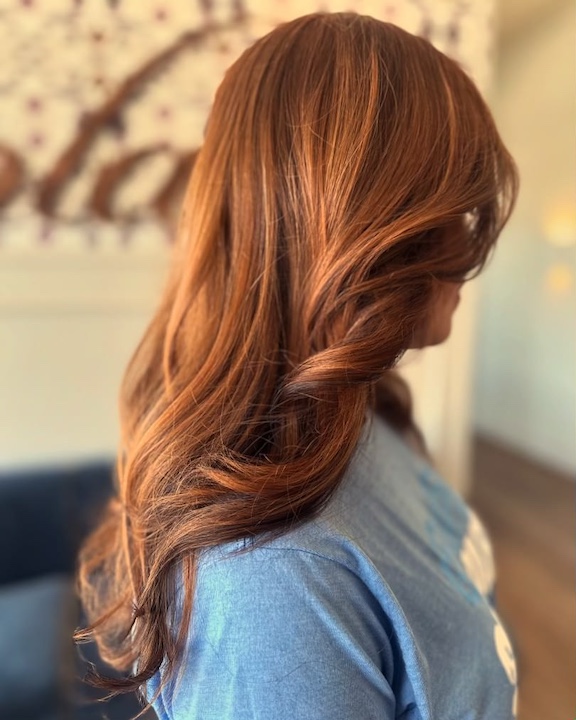
What Counts as a Color Correction
Color correction is any appointment where the main job is undoing or reworking color that’s already there, rather than applying color to a clean canvas. The usual suspects:
- Box dye buildup. Layers of home color stack up and oxidize darker, which is why it eventually goes flat and inky no matter what the box promised.
- Brass. Lightened or faded color drifting warm: yellow in blondes, orange in brunettes. Sometimes a toner fixes it in an hour; sometimes the brass is a symptom of a bigger lift problem.
- Banding. Visible stripes where different rounds of color overlap, often one dark band where box dye was pulled through already-colored ends.
- Too dark, too light, or just wrong. The color came out nothing like intended, whether it happened at home or in someone else's salon.
- Old highlights or balayage grown out badly, leaving hot ends and a murky middle.
If your situation is mostly “my gray is coming in and my old color is fighting it,” that can be a correction too, but it might really be a transition plan; the gray transition page covers that path, and the consultation will tell you which you actually need.
Why There's No Price List for This (an Honest Answer)
Every other service page on this site publishes prices, so this one owes you an explanation. Correction is the one service where a flat quote would be a guess dressed up as a promise. Two heads of “black box dye” can be entirely different jobs: one lifts clean in a single session, the other has five years of layered pigment that will only let go gradually.
So it works like this instead. You book an appointment. Kasey looks at your hair, in person, and asks what’s been on it, and you can tell her the whole truth because there’s no judgment coming. Then you get a realistic plan: what’s achievable, in how many sessions, and at what cost, before anything is mixed. If the honest answer is “this takes three visits over four months,” you’ll hear exactly that instead of a promise of platinum by Friday. And if the honest answer is “this is an $85 toner, not a correction,” you’ll hear that too.
How the Work Actually Goes
Correction is careful, deliberate work, and the sequence matters more than in any other color service.
First, a strand test where the damage or buildup is worst, so decisions get made on evidence instead of hope. Then the correction itself, which depending on your situation may involve gently removing old pigment, lifting banded sections evenly, filling over-lightened hair back to a workable base, or neutralizing brass with the right counter-tone. The one non-negotiable is hair health: pushing fragile hair to a target shade in one sitting is how corrections become disasters of their own. If your hair needs to rest between sessions, it rests.
Finally, a toner and a plan for home care, because corrected color needs a little protection while it settles: usually a pigmented shampoo and real moisture, nothing exotic.
After the Correction
Here’s the good news at the end of the tunnel: once your color is corrected, you get to choose what normal looks like, and normal is cheaper. Some clients move to simple all-over color they refresh a few times a year. Some go dimensional with highlights or balayage so grow-out stops being an event. And if silver is part of your picture, gray blending turns the gray from the problem into part of the design. The correction is the exit ramp off the treadmill, not a new subscription.
FAQ
Almost always, yes. How fast depends on how many layers are on the hair and how dark they’ve oxidized. Some box-dye fixes are one session; stacked years of it come out gradually. You’ll know which situation you’re in after the consultation, not after you’ve paid.
Underlying warm pigment gets exposed whenever dark hair is lifted or dark dye fades. It’s basic chemistry, and by itself it says nothing about the quality of the work, but it does need the right counter-move: sometimes just a toner, sometimes a proper correction if the lift underneath is uneven.
It’s priced by consultation, because the honest range is too wide to publish responsibly; a one-session fix and a multi-visit rebuild are different jobs. What you will get is an estimate for your specific hair before any work begins, and if the fix is small, you’ll be told it’s small.
Sometimes. Toner-level fixes and single-process corrections often can. Heavy buildup, extreme lightening, or going from very dark to light usually can’t be done safely in one sitting, and anyone who promises otherwise is gambling with your hair. You’ll get the realistic timeline upfront.
Not even slightly, and you won’t be asked to relive it. Corrections from other salons are routine work here. The assessment covers what’s on your hair; who put it there never enters into it.
It's fixable
An honest read on what’s on your hair and a realistic plan to get it where you want it. No judgment, no surprises.

Hair by Kasey Erokhin. A private one-chair studio for color, cuts, and gray done your way.
Serving
Rancho Bernardo · Poway
4S Ranch · Sabre Springs
Visit
Sola Salon Studios, Suite 15
12004 Carmel Mountain Road
San Diego, CA 92128
(917) 374-4878
Free parking
© 2026 The Salon 619 · Instagram